Friday, October 14, 2005

The innumerable stars


a painting by Vija Celmins

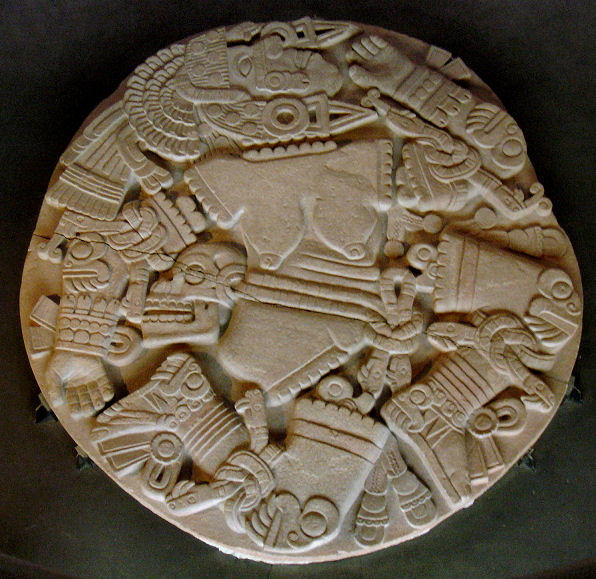
The Coyolxauhqui Stone


Coyolxauhqui, Aztec moon goddess, cast down from Snake Hill by Huitzilopochtli bursting from the head of his mother. The Sun God eclipses the moon and scatters the innumerable stars.
Above the steps you swept the stone,
you passed the broom on every spot.
The flowers of night released their stars.

You swept and swept.

The stars stood grimly quiet, like vengeful sons.
The moon sat partly veiled, the stars around her
bristled and glistened in ranks.

We sank at first under their starry will,
we almost succumbed.

You took off my glasses and spat on your hanky,
wiping the dust from each lens.

Beneath the stars, the most delicate touch.
Pieces of down from the sweepings were caught on your dress.
We gazed up at the stars,
we tried to puzzle out their coded wish.

That night was the first I felt him kick against my palm.
I tried to listen to his heartbeat through a rolled-up piece of card
but I could never make it work.

You rested a while on the steps.
Dusty ropes of spider silk,
feathers and threads and stems
clung to your dress.

Two fingers breadth below the umbilicus
we both felt his feathery grip.
The stars shrank back from his determined glare.
He will fight his way out.

The stars spat down upon the earth
with narrow-minded eyes.
They gathered in confiding groups
and whispered plans.

We choose to stare them out, defy their rule.

Those starry motes looked ready to be swept.
You raised your broom.

Sgùrr Alasdair

Dimitto

Thalla, a leabhair bhig neo-euchdaich:
amhairc a-steach 'na sùilean leugach:
ge bacach thu, chan eil thu breugach:
'n àm sgaoileadh sgiath bidh tu thar shlèibhtean.

Go, little ineffective book,
look into her shining eyes:
though lame, you are no liar:
in the time of wing spreading you will be over mountains.

Somhairle MacGill-Eain

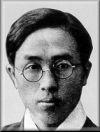
Chong Chi-yong (1903 - ? )


White Deer Lake

1.

Nearer the summit, the fainter the scent of gaudy flowers. As I climb, their waists vanish, then their necks, and finally only their faces peek, etched in patterns. Where a chill air matches that of the north, plants vanish, but are resplendent like stars strewn in the August sky. Fall evening shadows, stars light up in the bed of flowers. Stars move, I am bone-tired.

2.

I have revived after wetting my throat with the lovely fruit of mountain orchids.

3.

A white birch turns into a skeleton beside another white birch. I won't mind turning white as a birch after death.

4.

In a demon-deserted desolate corner, ghostly flowers turn blue in the face.

5.

At 6,000 feet, horses and cows mingle with men. Horse with horse, cow with cow, a pony follows a cow, a calf a mare - but they part.

6.

A cow had a hard time at first calving. In confusion she ran a hundred ri downhill to Sogwipo. The motherless calf moos, following persistently after a horse or a climber. Thinking of having to entrust our children to a strange mother*, I wept.

7.

Orchid's fragrance, oriole's call, whistle of Cheju birds, sound of water skittering over the rocks, pines at the ruffle of a distant sea. Among the ash trees, camellias, and overcup oaks, I missed my trail and emerged on a path winding around the white rock covered with creepers. I run into a mottled horse, which does not back away.

8.

Flowering ferns, bracken, bellflowers, wild asters, umbrella plants, bamboo, manna lichens, alpine plants with starlike bells - I digest them, am drunk on them, and fall into a doze. Yearning for the crystalline water of White Deer Lake, their procession on the range is more solemn than clouds. Beaten by showers, dried by rainbows, dyed by flowers, I put on fat.

9.

The sky rolls in the blue of White Deer Lake. Not even a crayfish stirs. A cow skirted around my feet disabled with fatigue. A wisp of chased cloud dims the lake. The lake that reflects my face all day is lonesome. Waking and sleeping, I forgot even my prayers.

* refers to the Japanese colonisers

Chong Chi-yong (translated by Peter H. Lee)

from Modern Korean Literature - An Anthology (University of Hawaii Press)

A Cambodian Poem


Oh Khmers with black blood!
Now the eight-year Buddhist prophecy is being fulfilled.
Vietnam is the elder brother, Kampuchea is the younger.
If we do not follow the Vietnamese as our elder brothers,
There will be nothing left of the Khmer this time but ashes.
Oh! Khmers with black blood
Servants of the Chinese, killing your own nation.

Now you Americans have the upper hand
You must repay the Khmer quickly,
Because the Khmer have strived and struggled for a long time.
Don't bring the wicked B-52s to pay us back. That's not enough.
Bring atomic bombs. That is the repayment needed.
Because the Khmers are building one hundred houses at a time.

Oh! Khmers with black blood!
There will be nothing left of the Khmer this time but ashes.
Oh Damrei mountains! The timber is all gone now,
No forest, no rocks any more. There can be only ashes left,
Because the Americans are paying Kampuchea back with blood.
Only garlic remains.

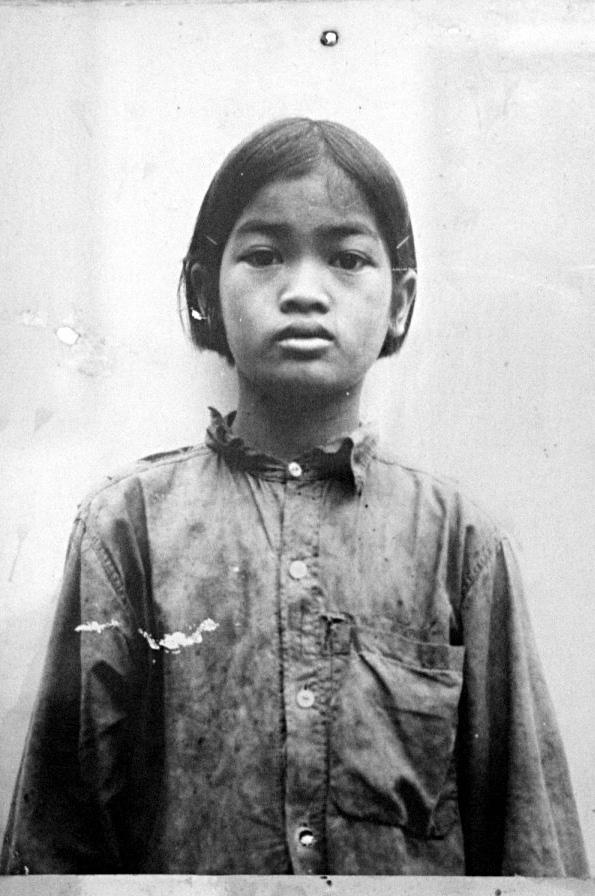
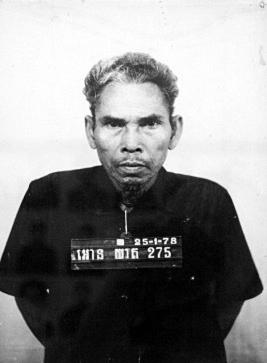
A poem from Cambodia, written by Korb in 1978 under the Khmer Rouge, printed in "The Pol Pot Regime" by Ben Kiernan, pg. 435.

"This person formerly was normal in character. Then, over about ten days, he went crazy. He was taken to be cured in the subdistrict hospital. When he is alone, he is quiet, and doesn't say a word; if many people come in, first he begins to whistle and then he sings the following rhyme aloud".

Report to Comrade Uncle An, 8 July 1978

Somhairle MacGill-Eain

L

Chan eil anns a' bhròn ach neoini
's chan eil anns a' ghaol ach bruan
fa chomhair nan reul a' sgaoileadh
's an saoghal a' dol 'na chuairt.

Agus liuthad millean bliadhna
on thriall an Talamh 'na chaoir
agus liuthad millean iadhadh
a thug e le thriall air gaol.

Dè dhomsa a mhillean iadhadh,
dè dhomsa a chian chùrs' aost
a chionn nach toir e le ghrian-leus
gnè shìorraidheachd do mo ghaol!

Seatadh e fad rèis a bhuantachd
tro chluaintean glasa nan speur
a chionn nach dealbhar le buaidh e
'na chumadh luaidhe dom chèill!

A chionn nach eil suim dar miannan
anns an iadhadh bhiothbhuan chlaon,
chan eil mo shuim-sa ra chiadan
no mhilleanan sgialachd gaoil.

Nam b'urrainn aodann mo luaidhe
bhith àlainn is buan gu bràth
bheirinn dùbhlan do Thìm le bhuadhan
le nodhachd 's luathghair fàis.

Sorrow is zero
and love but a crumb -
before the stars and their expansion,
and the turning of the world.

And the many millions of years
since the Earth journeyed in flame
and the many million times
its course has encircled love.

What to me are its million circuits,
what to me its ancient, aged course,
since it will not give to my love
with its sunbeams any form of everlastingness!

Let it race for all the time that it has
through the pale meadows of the sky
since it cannot be mastered and shaped
into the form of affection!

Since it takes no heed of our longings
in its unvarying tilted circuits,
I do not heed for myself its hundreds
or millions of stories of love.

If the face of my dear one could forver
be lovely and steadfast,
I would face down Time with its power
with the novelty and joyousness of growth.

Somhairle MacGill-Eain (from Dàin do Eimhir)

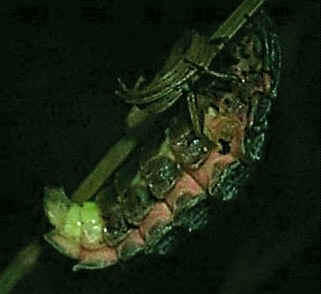
Leus-chnuimh / Glow-worm

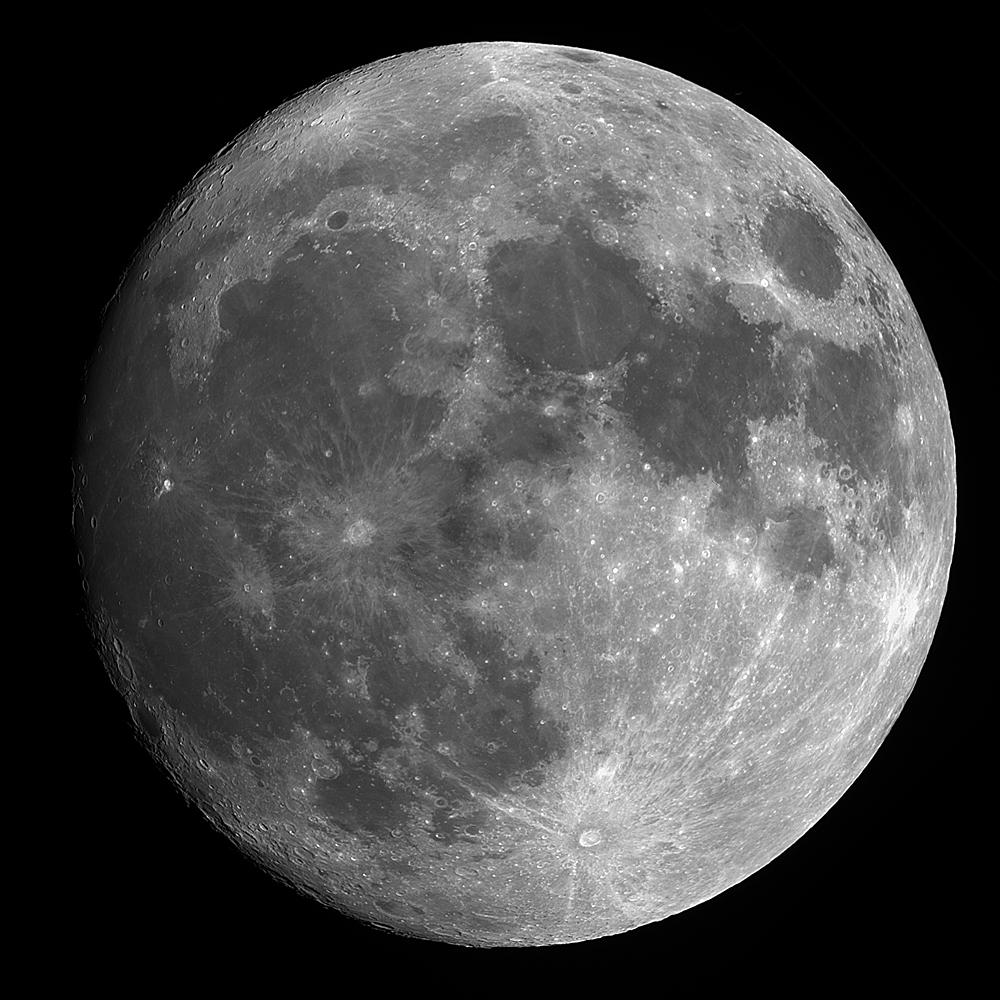
Moon Landings

The moon on television never errs,
and shares the worker's fear of immigration,
a strange white goddess imprisoned in her ash,
entombed Etruscan, smiling though immortal.
We've clocked the moon; it goes from month to month
bleeding us dry, buying less and less...
chassis orbiting about the earth,
grin of heatwave, spasm of stainless steel,
gadabout with heart of chalk, unnamable
void and cold thing in the universe,
lunatic's pill with poisonous side effects,
body whose essence is its excess baggage,
compressed like a Chinese dried caterpillar...
our hallucinator, the disenchantress.

Robert Lowell (from History)

Thursday, October 13, 2005

Apollo 8

Bizarre Apollo, half what Henry dreamed,
half real, wandered back on stage from the other wing
with its incredible circuitry.
All went well. The moon? What the shadow seemed
to Henry in his basement: shadows gathering
around an archaic sea

with craters grand on the television screen,
as dead as Delphi treeless, tourist gone
& the god decidedly gone.
Selene slid by the Far-Shooter, mean
of plagues & arrows, whom the doom clampt on,
both embarassed in the Christian dawn.

(That roar you hear as the rocket lifts is money, hurt.)

Which dawn has ended, and it is full day.
And the mountain of Mao flesh, did it once respond
'Let all moons bloom'? O no,
these events are for kids & selenographers, say,
a deep breath, creating no permanent bond
between the passive watchers & moonglow.

John Berryman (from Henry's Fate & Other Poems)

Màiri Mhòr nan Oran

Tha 'n sluagh air fàs cho iongantach
'S gur cruithneachd leotha bròn,
'S mur tèid thu ann am faochaig dhaibh,
Chan fhaodadh tu bhith beò.

...

Ach bhon as luibh an dìomhanas
A riaraicheas an fheòil,
Tha i leantainn rium cho daingeann
'S a tha 'm barriall ris a' bhròig.

The people have grown so strange
That sorrow is wheat to them.
And if you do not go into a whelk for them
You will not be suffered to live.

But since vanity is a plant
That satisfies the flesh,
It clings to me as firmly
As a shoelace to the shoe.

Màiri Mhòr nan Oran

Sunset on Mars

Though the great Waters sleep,
That they are still the Deep,
We cannot doubt -
No vascillating God
Ignited this Abode
To put it out -

Emily Dickinson

Photo by Nan Goldin

Armenian girl

I am like the eye and you the light, my soul. Without light the eye is dark.
I am like the fish and you the water, my soul. Without water the fish is dead.
When the fish is removed from the water but returned to it, it can live.
But when they take me from you, I'll die, and there will be no remedy.

...

Brothers, they lie when they say you cannot tame a peacock.
I saw one the other day, whose owner I truly envy.
Her eyebrows were drawn with a pencil and her mouth was as sweet as honey.
She could press a dead man to her, then let him go, alive.

Oh my little one, shall I ever conquer your heart?
Your breast is like a sea, a sea cool to my fever.
Let me be like the salamander, who enters the sea of your breast and swims there,
Then gets away only to rest in the shade cast by your lashes.

Nahabed Kouchag (d. 1592)

Tuesday, October 04, 2005

Dactyl and Ida

I step out in a long white nightgown and address the moon.
We had this conversation yesterday.
You don't need a card to get into my room,
but I hate it, that you know what I'm thinking.